
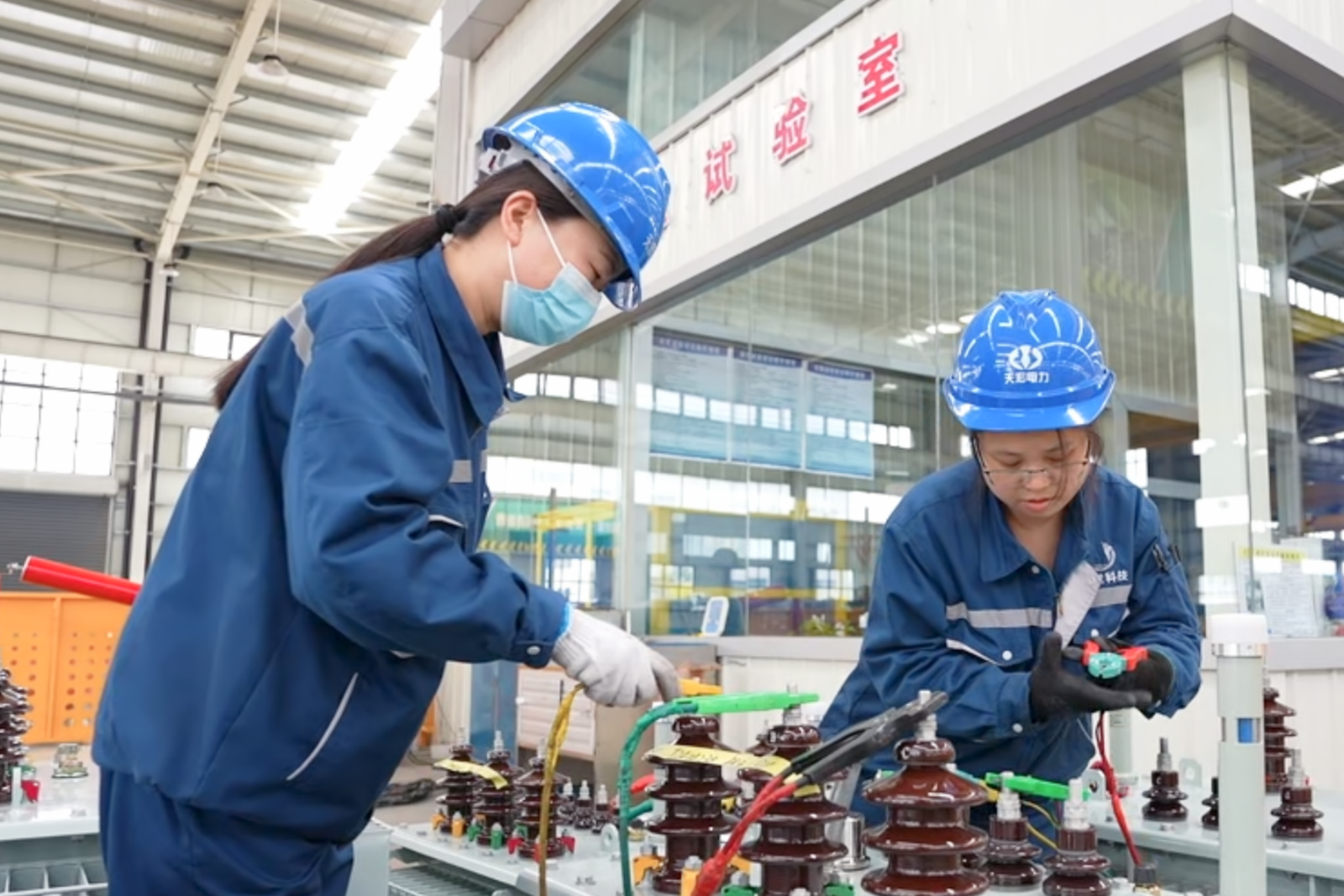
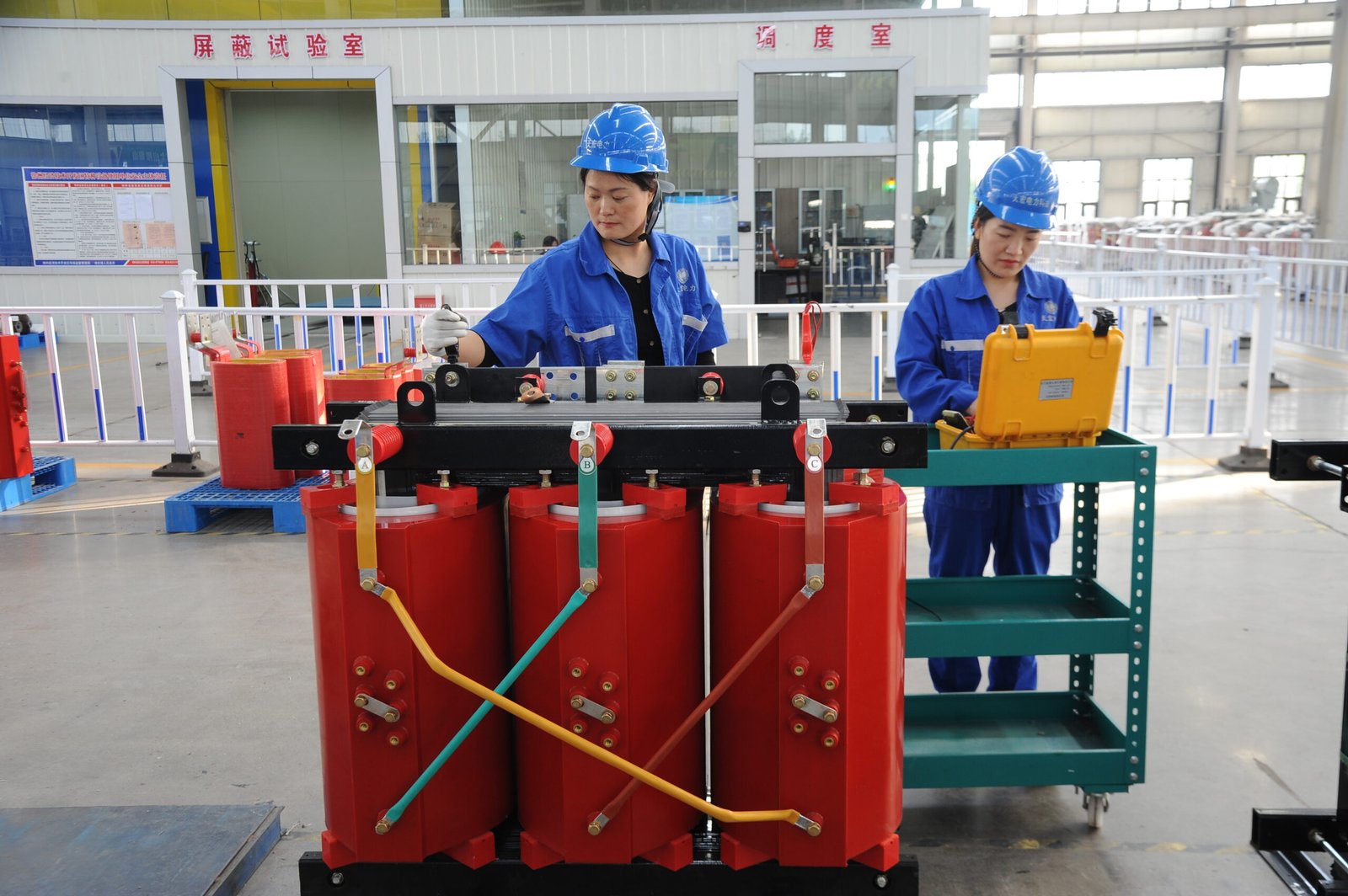
Electrical testing is an important stage before a transformer leaves the factory. It allows technicians to check the electrical characteristics of the unit and compare the recorded data with the agreed technical requirements. At OMEGA Transformer, technicians connect the test leads carefully to the transformer terminals and confirm that each connection is correctly positioned before beginning the measurement. The results are then reviewed and recorded as part of the inspection process. Measurements are monitored from the nearby control station. The digital system helps the operator observe the test data while technicians work with the transformer in the testing area. The open workshop layout also allows several transformers to be inspected in an organized production environment. Each unit follows the applicable project specifications and the inspection requirements agreed with the customer. Measurements are monitored from the nearby control station. The digital system helps the operator observe the test data while technicians work with the transformer in the testing area. The open workshop layout also allows several transformers to be inspected in an organized production environment. Each unit follows the applicable project specifications and the inspection requirements agreed with the customer. Transformer Specifications and Test Documentation Review the specifications for our S13 oil-immersed distribution transformer or SC(B)18 dry-type power transformer. For a project quotation, contact OMEGA Transformer with the required capacity, voltage ratio and testing requirements.
Transformer Inspection and Testing at OMEGA
A finished transformer is more than its enclosure, windings, and connections. Inspection and testing provide the information needed to assess the equipment against its specified requirements. At OMEGA Transformer, these photographs offer a closer look at the testing areas for dry-type and oil-immersed transformers. The wider workshop view shows both product types positioned around the laboratory, bringing the equipment and working environment into focus. The opening photograph shows two technicians working beside a dry-type transformer, with a portable instrument positioned on a trolley. The red cast-resin coils, phase markings, and connections are clearly visible, giving customers a close-up view of the equipment during inspection work. In another part of the workshop, oil-immersed transformers stand in front of a glazed control room. Test equipment and overhead leads are arranged around the working area, while an operator works at the console behind the window. A second view shows the connection arrangements more clearly, with suspended test leads extending towards the transformer terminals. Several units are positioned within the area, illustrating how the testing facilities sit alongside the factory’s production operations. For each project, the test scope and acceptance criteria should match the agreed technical requirements. Clear records help connect the equipment being supplied with the results reviewed by the technical team. These workshop scenes give customers a view of the people and facilities behind OMEGA’s products. From hands-on inspection to work at the control console, they show a part of the manufacturing process that is less visible in a product catalogue. If your project requires particular tests, documentation, or witness arrangements, discuss these with our team during the quotation stage. Contact info@omegatransformer.com with your transformer specifications and project requirements.
Transformer Radiator Surface Finishing
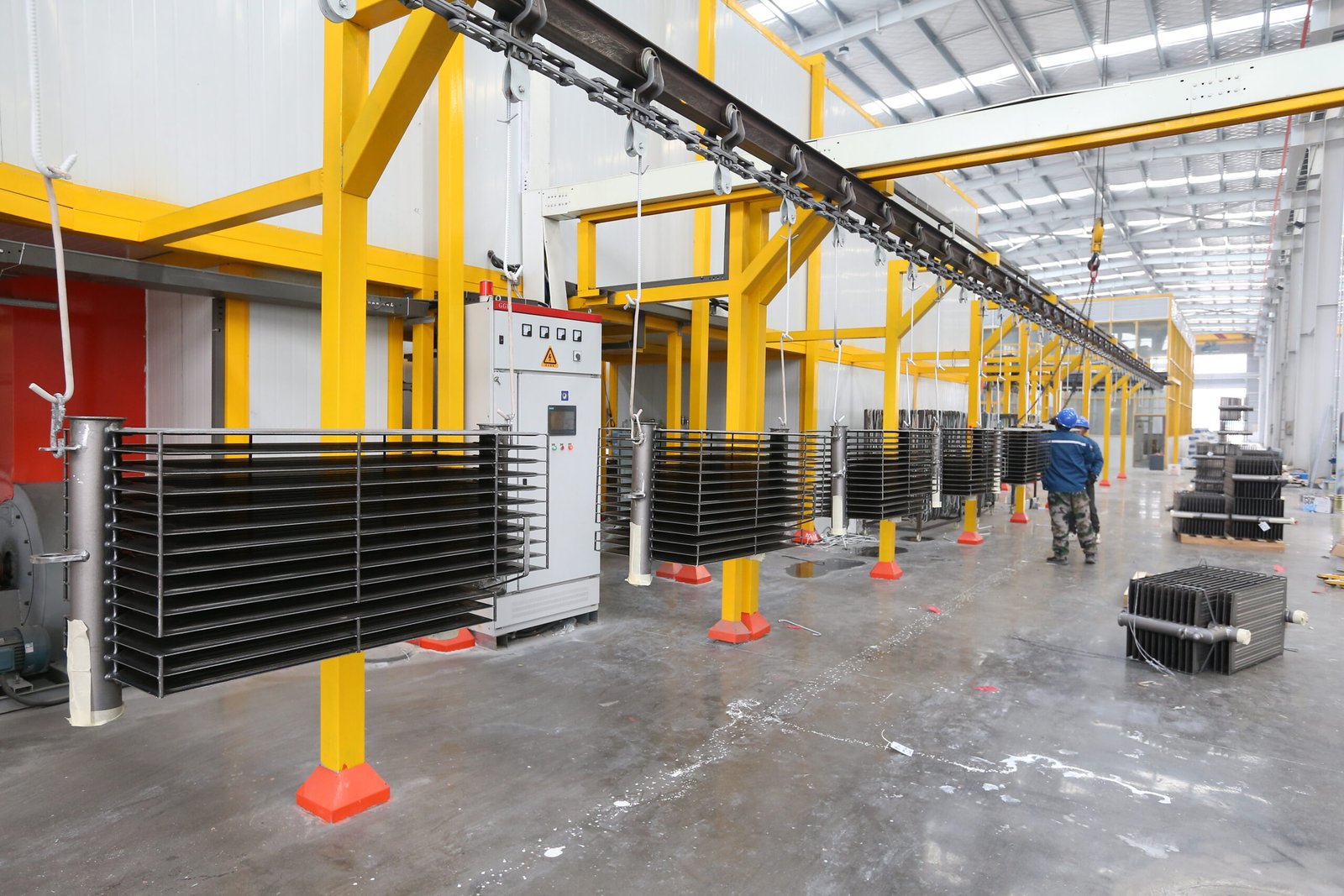
At OMEGA Transformer, the work behind a finished transformer extends to each individual component. These workshop photographs show radiator assemblies being handled, suspended along an overhead conveyor, and coated in a dedicated work area. Two workers guide a radiator assembly using lifting equipment near the conveyor line. Its closely spaced panels and connection points are clearly visible, showing why careful positioning matters when moving these components between workstations. Along the overhead conveyor, radiator assemblies hang from individual hooks, leaving their exterior surfaces accessible for the next stage of work. Inside the coating booth, an operator in protective clothing works on a suspended assembly. The radiator’s layered construction creates surfaces and spaces that require attention during application. The coating material and finish depend on the product specification and intended operating environment. Nearby assemblies display a light-grey exterior finish. Their repeated panel spacing and connecting pipes offer a closer look at components that customers usually see only as part of a complete transformer. From component handling to surface finishing, these photographs reveal another part of the manufacturing work taking place inside OMEGA’s factory. Planning a power or distribution transformer project? Share your required capacity, voltage levels, installation environment, and any specific finish requirements with our team. Contact info@omegatransformer.com to discuss your project.
A Closer Look at OMEGA Prefabricated Substations
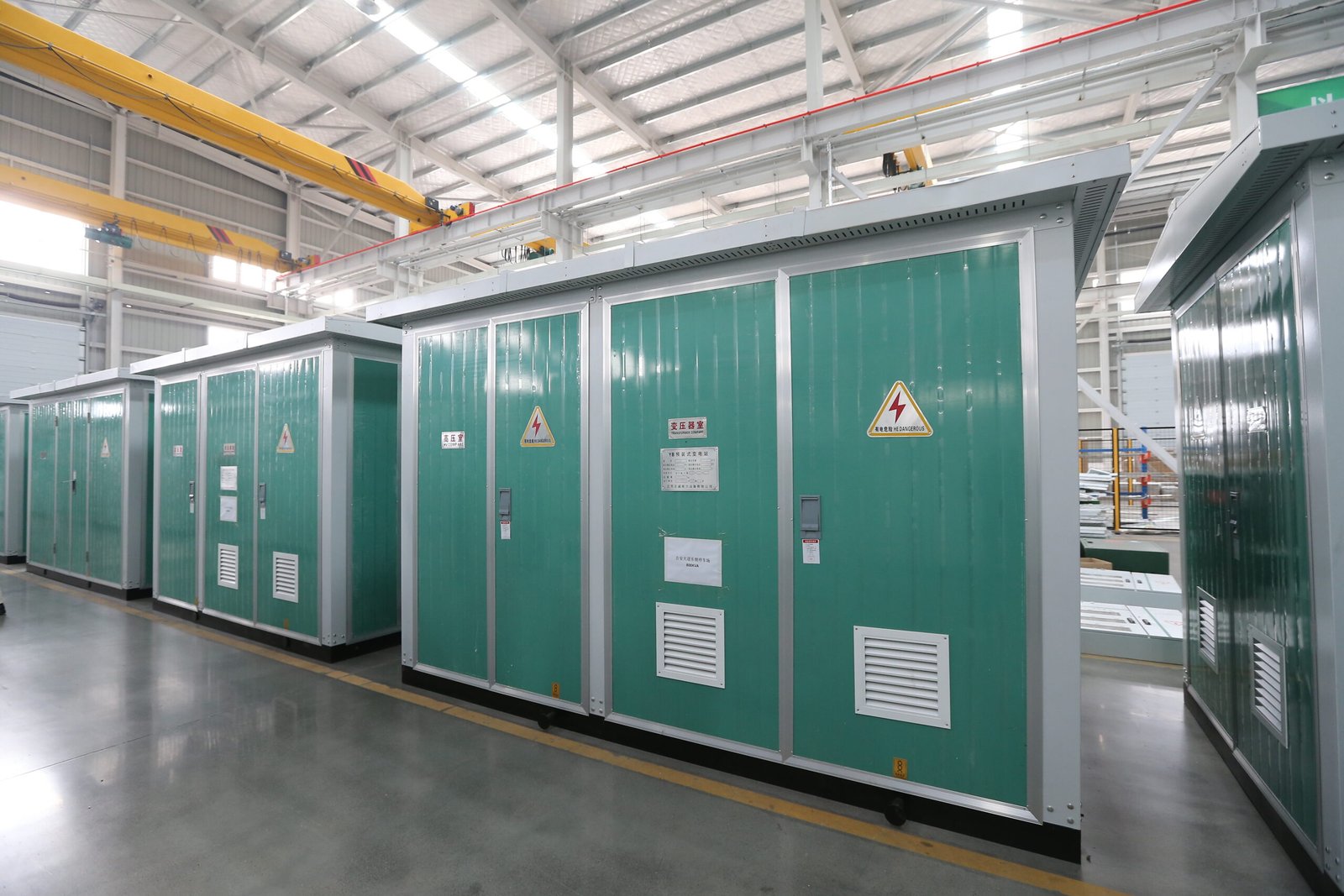
OMEGA Transformer’s workshop brings together prefabricated substations with different enclosure designs. This photo overview highlights their exterior appearance, access doors, and compartment layouts, giving customers a closer look at the equipment beyond a product specification sheet. The workshop view shows several green units arranged in a row, with visible labels identifying high-voltage and transformer compartments. These exterior details provide a starting point for discussing the layout and configuration required for a particular project. A Closer Look at the Enclosure The front view shows a green enclosure with a light-coloured frame, multiple access doors, and electrical warning signs. The visible labels identify low-voltage compartments, helping distinguish this side of the equipment. When discussing a substation project, customers should consider access for operation and maintenance alongside electrical requirements. Door positions, cable entry arrangements, and the available installation space are useful details to review during planning. A Different Exterior Style The dark enclosure offers a different visual approach, combining wood-look decorative strips with multiple doors and ventilation openings. Compared with the green units, this design places greater emphasis on the appearance of the enclosure. For projects where electrical equipment remains visible near buildings or public areas, the exterior finish can be part of the design discussion. Appearance should be considered together with the enclosure’s functional requirements and the conditions at the installation site.